Reframing Relapse as Part of the Process
Relapse is often viewed as a setback in recovery, but it can also be a powerful learning experience and an opportunity for growth. By reframing relapse as part of the process, you can approach it with self-compassion, resilience, and a renewed commitment to sobriety. Understanding that recovery is a journey—one with ups and downs—can help you stay focused on long-term progress.

Why Relapse Happens
Relapse is a common experience for many in recovery. It doesn’t mean failure; instead, it highlights the challenges of overcoming addiction and the need for continuous growth and adaptation.
Common Causes of Relapse:
- Triggers: Situations, people, or environments associated with past substance use.
- Stress: Emotional, financial, or physical stress can create vulnerability.
- Complacency: Believing you’re no longer at risk for relapse.
- Unresolved Issues: Underlying trauma, mental health conditions, or unaddressed emotions.
Recognizing the reasons behind relapse allows you to address them more effectively and strengthen your recovery plan.
Shifting Your Perspective on Relapse
Reframing relapse involves viewing it as part of the recovery process rather than a failure. This shift can help you:
1. Reduce Shame and Guilt
- Acknowledge that relapse is a common part of recovery.
- Treat yourself with kindness and recognize your effort to return to sobriety.
2. See Relapse as a Learning Opportunity
- Reflect on the circumstances that led to the relapse.
- Identify triggers, patterns, and areas for growth.
3. Strengthen Resilience
- Use the experience to build stronger coping mechanisms and strategies.
- Recognize that each step forward, even after a relapse, is progress.
Steps to Reframe Relapse
1. Acknowledge and Accept
- Accept that relapse is a normal part of the process for many people.
- Recognize that what matters most is your response to the relapse.
2. Reflect and Learn
- Journal about what happened, including triggers, emotions, and decisions.
- Ask yourself:
- What led to the relapse?
- How did I feel before, during, and after?
- What can I do differently next time?
3. Recommit to Recovery
- Revisit your reasons for choosing sobriety.
- Set new goals and affirm your commitment to long-term recovery.
- Share your intentions with a trusted friend, sponsor, or recovery group for added accountability.
4. Adjust Your Sobriety Plan
- Incorporate what you’ve learned into your recovery strategy.
- Add new coping mechanisms, routines, or support systems.
- Consider seeking additional resources, such as therapy or group meetings.
Lessons from Relapse
Every relapse offers lessons that can strengthen your recovery journey. Use the experience to:
1. Identify Triggers
- Recognize situations, emotions, or people that contribute to cravings.
- Develop strategies to manage or avoid these triggers.
2. Enhance Coping Skills
- Explore new ways to manage stress, anxiety, or boredom.
- Practice mindfulness, exercise, or creative outlets.
3. Build Stronger Support Networks
- Lean on friends, family, or support groups for encouragement.
- Stay connected to a recovery community that aligns with your needs.
Moving Forward with Confidence
Reframing relapse as part of the process empowers you to approach recovery with resilience and self-compassion. Remember that progress isn’t linear; it’s about continuous growth and effort. Each time you choose to recommit to sobriety, you’re building a stronger foundation for your future.
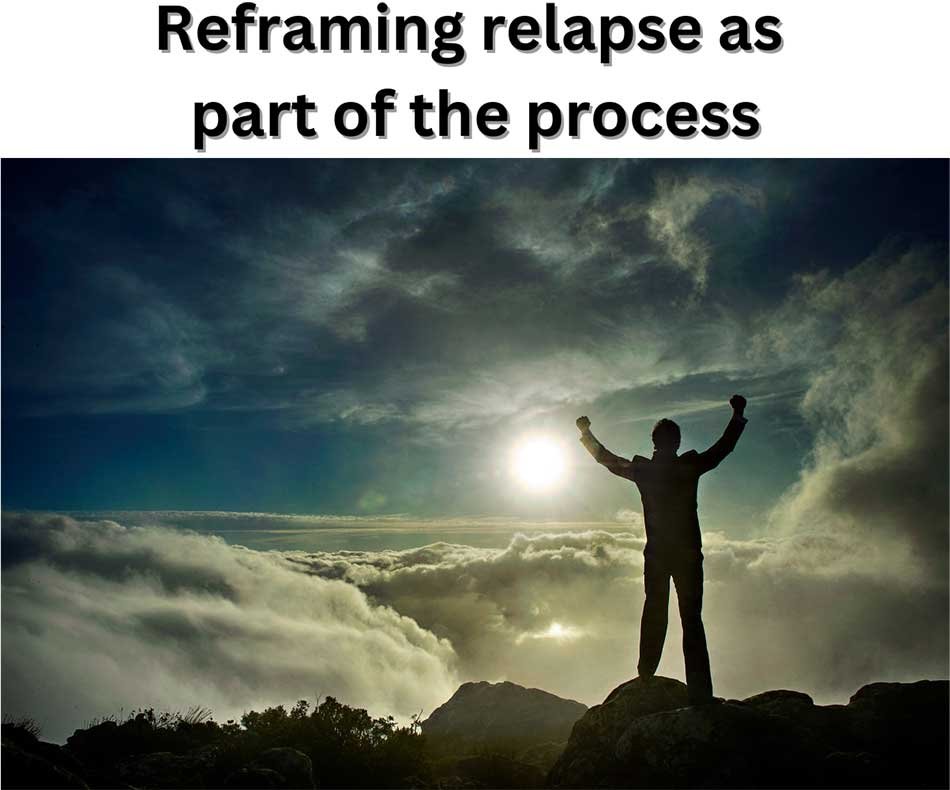
Picture This
Imagine viewing relapse not as a defeat, but as a stepping stone on your journey. Picture yourself learning from the experience, applying those lessons, and moving forward with renewed determination. With each challenge you overcome, you’re proving your strength and resilience, one step closer to the life you envision.
Share This Article
If you know someone who is navigating the challenges of relapse, please share this article with them. Your encouragement could help them reframe the experience and continue their recovery journey with hope and confidence.
Disclaimer
This article is based on personal experiences and observations. It does not represent or speak for any Anonymous programs.