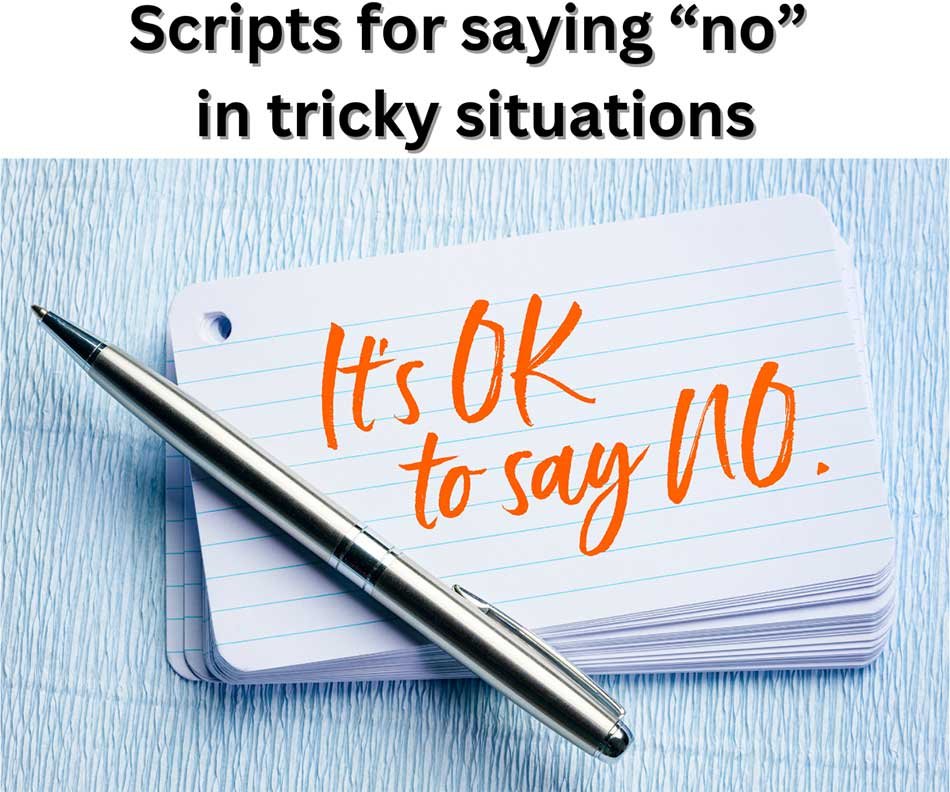
Scripts for Saying “No” in Tricky Situations
Saying “no” in challenging situations can be difficult, especially when social pressure or personal connections are involved. However, having prepared responses can make these moments easier to navigate. Whether you’re declining a drink, avoiding risky environments, or standing firm in your decisions, these scripts will help you set boundaries with confidence and clarity.

Why It’s Important to Say “No”
Saying “no” is a vital skill for maintaining sobriety and protecting your well-being. It allows you to:
- Set Boundaries: Communicate your limits and ensure others respect them.
- Avoid Triggers: Stay away from situations that jeopardize your sobriety.
- Maintain Control: Prioritize your health and recovery over social pressures.
General Tips for Saying “No”
- Be Direct: Keep your response clear and straightforward.
- Stay Calm: Use a steady tone and confident body language.
- Avoid Overexplaining: A simple “no” is often enough.
- Practice in Advance: Rehearse your responses to feel more prepared.
Scripts for Common Scenarios
1. When Someone Offers You a Drink or Substance
Direct Approach:
- “No, thank you. I’m not drinking tonight.”
- “I’m good, thanks. I’ll stick with water.”
Adding a Reason:
- “No, I’m focusing on my health right now.”
- “Thanks, but I’ve made the decision to stay sober.”
Redirecting:
- “No, thanks. By the way, how’s work going?”
- “I’ll pass, but tell me more about that trip you mentioned.”
2. When Someone Pressures You
Firm and Final:
- “I said no, and I’d appreciate it if you respected that.”
- “No, I’m not interested. Please don’t ask again.”
Humor:
- “Nope, I’m trying to set a world record for sobriety!”
- “No thanks, I’m allergic to hangovers.”
3. When Invited to a Risky Environment
Polite Decline:
- “Thanks for inviting me, but I’ll have to pass this time.”
- “I appreciate the offer, but that’s not my scene anymore.”
Offering an Alternative:
- “I’d love to catch up, but how about a coffee date instead?”
- “Thanks for thinking of me! Let’s do something different another day.”
4. When Asked Why You’re Not Drinking
Simple and Honest:
- “I’ve decided to focus on living a healthier life.”
- “I’m in recovery, and it’s important for me to stay sober.”
Lighthearted:
- “I’m the designated driver tonight—safety first!”
- “Drinking just isn’t my thing anymore.”
5. When Facing Persistent Questions
Redirecting:
- “Why not? Because I’ve got other priorities right now.”
- “Let’s not make it a big deal. What’s new with you?”
Asserting Boundaries:
- “I’m not comfortable discussing this. Thanks for understanding.”
- “My reasons are personal, and I’d rather keep them private.”
Dealing with Pushback
If someone challenges your “no,” it’s important to stay firm and composed. Here’s how to handle pushback:
1. Repeat Your Boundary
- “I’ve already said no, and I mean it.”
- “Thanks, but my decision hasn’t changed.”
2. Exit the Situation
- “I’m going to step away now. Enjoy the rest of your evening.”
- “I need to leave, but I’ll catch up with you another time.”
Practicing Your Responses
Rehearsing your responses can help you feel more confident in tricky situations. Practice with a friend, family member, or in front of a mirror to get comfortable.
Tips:
- Role-play different scenarios to prepare for various responses.
- Focus on maintaining a calm and assertive tone.
- Use positive body language, such as standing tall and making eye contact.
Picture This
Imagine confidently saying “no” when faced with pressure, feeling secure in your choices, and walking away with your sobriety intact. Picture yourself enjoying social situations without the weight of guilt or discomfort. Each time you stand firm, you’re proving to yourself and others that your well-being comes first.
Share This Article
If you know someone who struggles with saying “no” in tricky situations, please share this article with them. Your support could empower them to set boundaries and protect their sobriety.
Disclaimer
This article is based on personal experiences and observations. It does not represent or speak for any Anonymous programs.