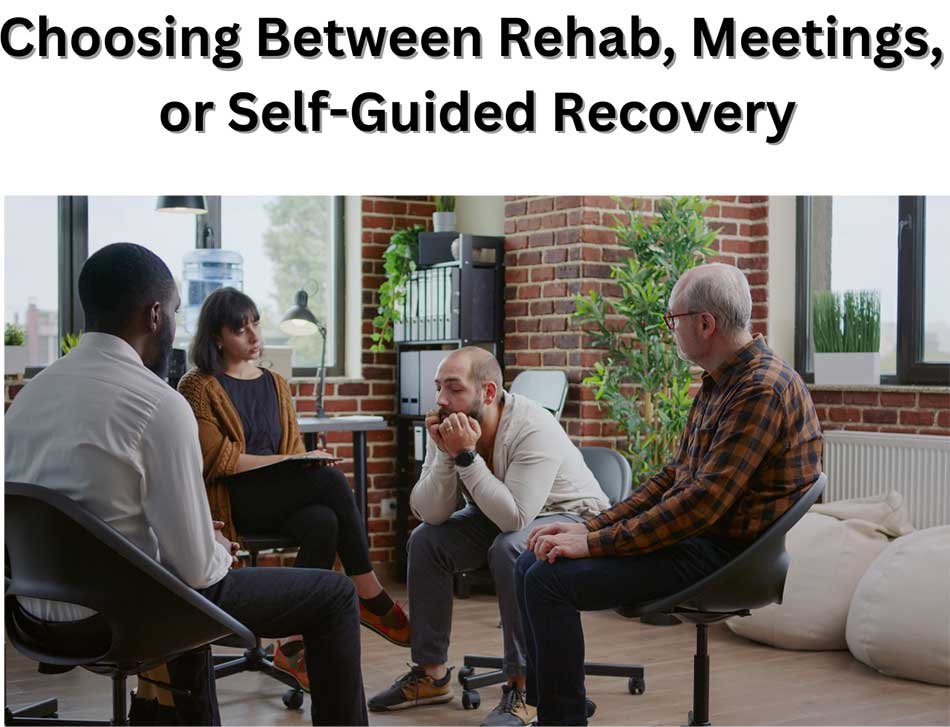
Choosing Between Rehab, Meetings, or Self-Guided Recovery
Embarking on the path to sobriety is a deeply personal journey, and there are many ways to approach it. Choosing between rehab, meetings, or self-guided recovery depends on your unique needs, circumstances, and preferences. This guide will help you understand each option, weigh the benefits, and make an informed decision that sets you up for success.

Understanding the Options
1. Rehabilitation Programs (Rehab)
Rehab provides a structured, intensive environment to address addiction. These programs often combine medical care, therapy, and education to support recovery.
Types of Rehab Programs:
- Inpatient Rehab:
- Requires living at the facility for a designated period (typically 30-90 days).
- Offers 24/7 medical care and a distraction-free environment.
- Outpatient Rehab:
- Allows participants to live at home while attending scheduled sessions.
- Balances treatment with personal and work responsibilities.
Benefits of Rehab:
- Comprehensive care for severe or long-term addictions.
- Access to medical detox and mental health professionals.
- A safe space to focus solely on recovery.
Considerations:
- Cost can be high, though many programs accept insurance or offer financial aid.
- Requires significant time commitment.
- May feel isolating from family and friends during inpatient treatment.
2. Support Meetings
Support meetings, such as Alcoholics Anonymous (AA) or Narcotics Anonymous (NA), provide a sense of community and accountability. These groups are based on shared experiences and mutual support.
Types of Support Groups:
- 12-Step Programs:
- Include AA, NA, and similar groups.
- Focus on spiritual growth and personal accountability.
- Non-12-Step Programs:
- Include SMART Recovery and Refuge Recovery.
- Emphasize science-based techniques and self-empowerment.
Benefits of Meetings:
- Free or low-cost access.
- Opportunity to build connections with others in recovery.
- Flexible schedules with in-person and online options.
Considerations:
- Effectiveness depends on active participation.
- May not address specific medical or mental health needs.
- Some individuals may not resonate with the group’s philosophy.
3. Self-Guided Recovery
Self-guided recovery involves creating your own path to sobriety using available resources, such as books, online tools, or personal routines.
Tools for Self-Guided Recovery:
- Recovery apps, such as Sober Grid or I Am Sober.
- Educational materials, including books, podcasts, and online courses.
- Journaling and mindfulness practices.
Benefits of Self-Guided Recovery:
- Complete flexibility and control over your process.
- No financial cost beyond chosen resources.
- Ability to tailor methods to your preferences.
Considerations:
- Requires high levels of motivation and self-discipline.
- Limited access to accountability and professional support.
- May not be sufficient for severe addiction or co-occurring mental health issues.
Choosing the Best Path for You
Factors to Consider:
- Severity of Addiction:
- For long-term or severe addiction, rehab may provide the intensive care needed.
- Mild or early-stage addiction might be manageable with meetings or self-guided recovery.
- Support System:
- If you lack a strong support network, rehab or meetings can provide external accountability.
- A robust network of supportive friends and family may make self-guided recovery more feasible.
- Mental Health Needs:
- Co-occurring mental health conditions often require professional treatment available through rehab.
- Meetings or self-guided approaches may not address underlying psychological issues.
- Budget and Time:
- Rehab is often the most expensive option but can deliver significant results.
- Meetings and self-guided recovery are more affordable and flexible.
- Personal Preferences:
- Some individuals thrive in structured environments, while others prefer independence.
- Consider what feels most comfortable and realistic for you.
Combining Approaches
You don’t have to choose just one path. Many people find success by blending elements of different approaches:
- Attend rehab for initial detox and therapy, then transition to meetings for ongoing support.
- Use self-guided resources alongside regular meeting attendance.
- Build a hybrid routine that includes professional counseling, peer support, and personal practices.
Picture This
Imagine stepping into a recovery approach that feels right for you. Picture yourself gaining strength and confidence as you progress, supported by the tools and community you’ve chosen. Whether it’s through rehab, meetings, or self-guided recovery, you’re taking the first steps toward a healthier, brighter future.
Share This Article
If you know someone who is deciding how to approach their sobriety, please share this article with them. Your encouragement could guide them toward a path that fits their needs and aspirations.
Disclaimer
This article is based on personal experiences and observations. It does not represent or speak for any Anonymous programs.