Sober Sleep Schedule: 9 Bedtime Routines for Better Rest
Why Alcohol Was Never Helping You Sleep, What Your Brain Is Actually Doing at Night During Recovery, and the Nine Specific Evening Practices That Transform the Most Vulnerable Hour of the Sober Day Into the Most Restorative
Introduction: The Sleep Lie
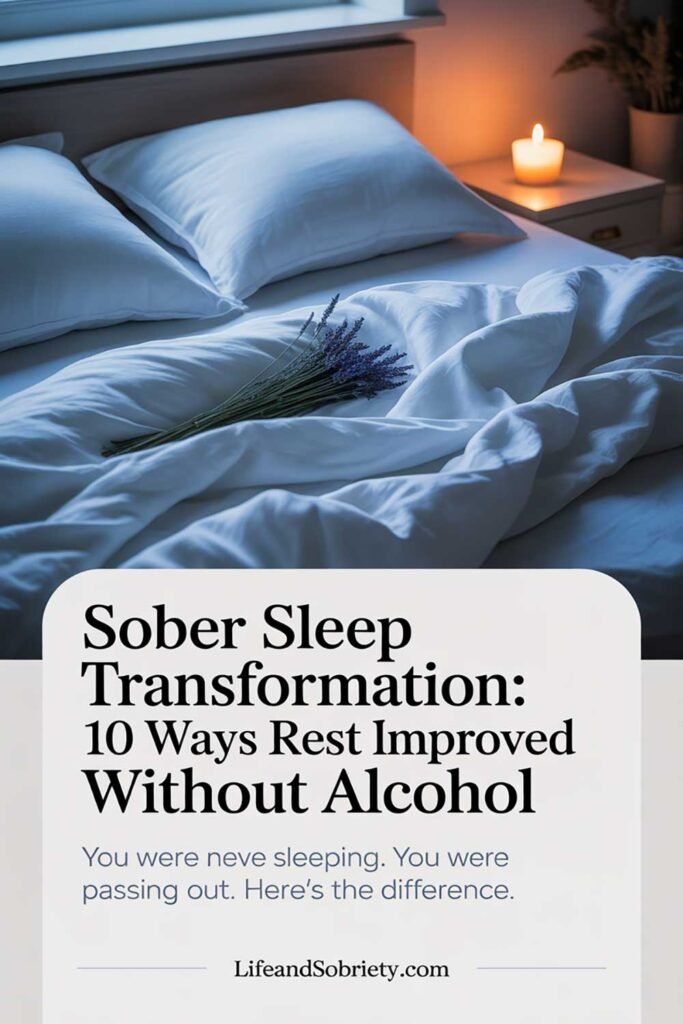
Alcohol told you it was helping you sleep. Every night, for however many years, the substance presented itself as the solution to the restless mind, the anxious body, the brain that would not turn off. You drank and the eyes grew heavy and the thoughts quieted and the consciousness faded and you called it sleep.

It was not sleep. It was sedation.
The distinction is not semantic. It is neurological. Sleep is a highly structured, multi-stage biological process during which the brain performs essential maintenance — consolidating memories, processing emotions, clearing metabolic waste, repairing neural tissue, regulating hormones, and recalibrating the neurochemical systems that govern mood, cognition, and emotional stability. Sedation is the suppression of consciousness. The two states look identical from the outside — eyes closed, body still, awareness suspended — but the internal processes are fundamentally different.
Alcohol disrupts every stage of sleep architecture. It suppresses REM sleep (the stage responsible for emotional processing and memory consolidation). It fragments deep sleep (the stage responsible for physical restoration and neural repair). It causes middle-of-the-night awakenings as the liver metabolizes the alcohol and the brain rebounds from the sedation. It increases sleep apnea severity. It disrupts circadian rhythm. It produces the paradox that every chronic drinker eventually discovers: you can drink yourself unconscious every night and still be exhausted every morning, because the unconsciousness you are producing is not the sleep your body requires.
Remove the alcohol and the sleep system must rebuild from the ground up. This rebuilding — part of the broader PAWS process — is one of the most frustrating experiences of early sobriety. The sleep may actually worsen before it improves. The insomnia that you expected sobriety to resolve may intensify. The nights may be longer, more restless, and more populated by vivid dreams than anything you experienced while drinking. The irony is cruel: you quit the thing that was supposedly helping you sleep, and the sleep got worse.
The sleep gets worse because it is getting real. The sedation mask has been removed and the actual sleep system — damaged, atrophied, and dependent on a chemical it no longer receives — is exposed. The system needs time to rebuild. And while it rebuilds, it needs support — not chemical support, not the return of the sedation, but the behavioral support of a bedtime routine designed specifically for the recovering brain.
These nine bedtime routines are that support. They are the practices that bridge the gap between the damaged sleep of early sobriety and the restored sleep that recovery eventually provides — the sleep that is deeper, more restorative, and more genuinely restful than anything alcohol ever permitted.
The Science of Sleep in Recovery
Before the routines, a brief understanding of what is happening neurologically — because understanding the process transforms the frustration into patience.
GABA recovery: Alcohol enhances GABA (the brain’s primary inhibitory neurotransmitter), producing the sedative effect. The brain compensates by downregulating GABA receptors. In early sobriety, GABA activity is suppressed — producing the hyperarousal, anxiety, and inability to relax that makes falling asleep difficult. GABA receptor density gradually normalizes over months.
Glutamate rebound: Alcohol suppresses glutamate (the brain’s primary excitatory neurotransmitter). The brain compensates by upregulating glutamate activity. In early sobriety, glutamate is overactive — producing the racing thoughts, the restlessness, and the neurological excitation that is the opposite of the calm required for sleep onset.
REM rebound: Alcohol suppresses REM sleep. In sobriety, the brain overproduces REM sleep to compensate — resulting in vivid, emotionally intense, sometimes disturbing dreams that fragment sleep and produce the sensation of having been busy all night instead of resting.
Circadian disruption: Alcohol interferes with melatonin production and circadian signaling. The body’s internal clock, accustomed to alcohol’s influence on the sleep-wake cycle, must recalibrate to produce melatonin on its own schedule — a process that takes weeks to months.
Timeline: Sleep disturbance in recovery typically peaks in the first one to three months and gradually improves over six to twelve months. Full sleep normalization may take up to two years in some individuals. The timeline is long. The improvement is real. The bedtime routines accelerate both.
The 9 Bedtime Routines
1. Set a Fixed Bedtime and Protect It Like Sobriety
The most foundational routine is the simplest: go to bed at the same time every night. Not approximately. Not when you feel tired. Not when the show ends. At the same time. Every night. Including weekends. Including holidays. Including the nights when you are wide awake and the bed feels like the last place you want to be.
Circadian rhythm — the internal biological clock that regulates the sleep-wake cycle — is calibrated by consistency. The clock needs regular signals to maintain its rhythm, and the most powerful signal is consistent sleep timing. A bedtime that varies by two or three hours on weekends undermines the circadian calibration that the recovering brain desperately needs.
Choose a bedtime. Make it realistic — early enough to allow seven to eight hours before your wake time, late enough that you are not lying in bed awake for an hour before sleep arrives. Then protect it. The way you protect your sobriety. The bedtime is not a suggestion. It is a boundary. Other activities end in time for the bedtime to be kept. Social events are left in time for the bedtime to be kept. The bedtime is non-negotiable because the sleep it produces is non-negotiable.
Real Example: Marcus’s 10 PM Boundary
Marcus, a 44-year-old contractor from Georgia, set a 10 PM bedtime at month two and has kept it for over three years. “People think I am rigid. I am rigid. My therapist said: ‘Your sleep is the foundation of every other recovery habit. If the sleep collapses, the routine collapses. If the routine collapses, the sobriety is vulnerable.’ I took that literally. 10 PM. Every night.”
Marcus has left dinner parties at 9:30. He has turned down late-evening invitations. He has explained to friends, family, and dates that 10 PM is his bedtime and it is not flexible. “Some people do not understand. That is fine. The people who understand are the people who see me functioning at a level I have not functioned at in twenty years. The sleep is the reason. The 10 PM is the commitment. I do not negotiate with the commitment.”
2. Create a Screen Sunset
The blue light emitted by phones, tablets, computers, and televisions suppresses melatonin production — the hormone that signals the brain to initiate sleep. The suppression is dose-dependent: more screen time closer to bedtime produces more melatonin suppression, which delays sleep onset, reduces sleep quality, and disrupts the circadian rhythm that the recovering brain is rebuilding.
Beyond the light itself, the content on screens — social media, news, email, the infinite scroll — activates the sympathetic nervous system (the fight-or-flight system), elevates cortisol, and produces the cognitive arousal that is the opposite of the calm required for sleep. The screen is doing to the brain at 10 PM what a cup of coffee does to the brain at 10 PM — stimulating it at the exact hour it needs to be winding down.
Create a screen sunset: a fixed time, sixty to ninety minutes before bedtime, when all screens are turned off. Not dimmed. Not switched to night mode (which reduces blue light but does not eliminate the content-driven arousal). Off. The phone goes on the charger in another room. The television goes dark. The laptop closes. The evening, from the screen sunset to the bedtime, belongs to the non-digital activities that prepare the brain for sleep.
3. Build a Wind-Down Ritual
The brain does not have an off switch. It does not transition from full wakefulness to sleep instantaneously — it requires a gradual dimming, a progressive reduction of stimulation, a behavioral sequence that tells the nervous system: the day is ending, the demands are over, the time for rest is approaching.
Active addiction provided a wind-down ritual — the drink was the signal. The first sip was the neurological announcement that the evening’s demands were concluded and the sedation was beginning. Remove the substance and the brain loses the signal. The wind-down ritual replaces it — not with a chemical but with a behavioral sequence that the brain, over time, learns to associate with the approach of sleep.
The ritual should take thirty to sixty minutes and should proceed in the same order every evening. The specific activities matter less than the consistency — the brain learns through repetition, and a wind-down ritual performed in the same sequence at the same time every night becomes a Pavlovian cue for sleep onset.
A sample sequence: Screen sunset. Change into sleep clothes. Prepare the next day (lay out clothes, pack a bag, set the coffee maker). A cup of herbal tea. Ten minutes of reading. Five minutes of journaling or gratitude. Lights out. The sequence is personal — yours will differ. The principle is universal: give the brain a consistent, calming, non-stimulating bridge between the day and the sleep.
Real Example: Nadia’s Thirty-Minute Bridge
Nadia, a 34-year-old graphic designer from Portland, designed her wind-down ritual at month three after weeks of insomnia. “I was doing everything wrong. Watching television until my eyes closed. Scrolling my phone in bed. Eating late. Drinking caffeine at 7 PM. The sleep was terrible and I was blaming sobriety instead of blaming my behavior.”
Nadia’s wind-down begins at 9:30 PM. “Screens off. I change into pajamas. I make chamomile tea. I lay out tomorrow’s clothes. I read for fifteen minutes — a physical book, not a screen. I write three gratitudes. I brush my teeth. I get into bed. Lights off at 10.”
The ritual took two weeks to become automatic. “By week three, my brain was anticipating the sleep before I got into bed. The chamomile tea was the signal — the way the wine used to be the signal, except the tea was telling my brain ‘wind down’ instead of telling it ‘shut down.’ The difference between winding down and shutting down is the difference between sleep and sedation. Sleep is what I was after. And the ritual delivers it.”
4. Make the Bedroom a Sleep Sanctuary
The bedroom should do two things: facilitate sleep and facilitate intimacy. Everything else — television, work, phone scrolling, eating, worrying, planning — should occur elsewhere. The principle is stimulus control: the brain learns to associate environments with specific behaviors, and a bedroom associated exclusively with sleep becomes a neurological cue for sleep.
The bedroom environment itself should be optimized for sleep: dark (blackout curtains or a sleep mask), cool (research suggests 65-68 degrees Fahrenheit is optimal for sleep onset), quiet (earplugs or a white noise machine if environmental noise is a factor), and free of screens. The phone charges in another room. The television is removed or remains permanently off. The laptop does not enter.
The environmental optimization sounds minor. It is not. The recovering brain is neurologically sensitized to stimulation — the GABA deficit and glutamate surplus of PAWS produce a brain that is easily aroused and slowly calmed. An optimized bedroom reduces the stimulation load at the exact moment the brain needs stimulation reduction most.
5. Practice a Body Relaxation Technique
The recovering nervous system carries tension — the residual hyperarousal of PAWS, the accumulated stress of the day, the physical manifestation of the anxiety that the GABA deficit produces. This tension, stored in the muscles and maintained by the sympathetic nervous system, is incompatible with sleep onset. The body must release the tension before the brain can initiate sleep.
Progressive muscle relaxation (PMR) is the most evidence-based technique for sleep-directed tension release. The practice is simple: starting at the feet and moving upward, systematically tense each muscle group for five seconds and then release for fifteen seconds. Feet. Calves. Thighs. Abdomen. Chest. Hands. Arms. Shoulders. Neck. Face. The tensing-and-releasing cycle activates the parasympathetic nervous system (the rest-and-digest system), reduces cortisol, and produces the physiological state of relaxation that the brain requires for sleep onset.
Alternatively: a body scan meditation (lying still and directing attention progressively through each body part without tensing), deep breathing exercises (four seconds inhale, seven seconds hold, eight seconds exhale — the 4-7-8 technique), or gentle stretching focused on the areas where your body carries tension.
Real Example: Vivian’s Nightly Body Scan
Vivian, a 52-year-old real estate agent from Arizona, practices a ten-minute body scan every night in bed. “My therapist introduced it when the insomnia was at its worst — month two, when I was averaging four hours of fragmented sleep and the exhaustion was threatening my recovery.”
Vivian lies in bed and scans from her feet upward, noticing sensation without trying to change it. “Feet: tight. I notice. I breathe into the tightness. Calves: holding. I notice. I breathe. The scan takes ten minutes. By the time I reach my forehead, the body has shifted. Not completely — some nights the tension stays. But the scan gives the body permission to release. The alcohol used to force the release. The body scan asks for it. Asking is slower. Asking is also healthier.”
Vivian falls asleep during the body scan approximately four nights per week. “The scan is not a guaranteed sleep mechanism. It is a guaranteed relaxation mechanism. And relaxation, consistently practiced, is what the brain needs to rebuild the sleep it lost.”
6. Write the Day Closed
The racing mind at bedtime — the thoughts that circle, the worries that amplify, the to-do list that expands the moment the head hits the pillow — is the cognitive manifestation of the glutamate surplus and GABA deficit that characterize PAWS. The brain, neurologically primed for excitation, cannot stop processing when the day is over. It carries the day’s unfinished business into the bed and refuses to release it.
Writing the day closed is the practice of externalizing the unfinished business before it enters the bed. Ten minutes. A journal or a notebook. Three components: what happened today (a brief factual summary that tells the brain the day has been processed), what needs to happen tomorrow (a transfer of the to-do list from the brain to the page, relieving the brain of the obligation to remember), and three gratitudes (a deliberate redirection of attention from what is wrong to what is right).
The writing does not need to be literary. It needs to be complete — complete enough that the brain, having deposited its contents on the page, can let go. The notebook holds the worries. The brain holds the sleep.
7. Avoid Caffeine After Noon
This routine sounds extreme. For the recovering brain, it is essential. Caffeine has a half-life of five to six hours — meaning that a cup of coffee consumed at 3 PM still has half its caffeine circulating in the bloodstream at 9 PM. For a brain that is already glutamate-heavy and GABA-light, the residual caffeine is the neurochemical equivalent of adding fuel to a fire that is already burning too hot.
The noon cutoff is conservative. Some sleep researchers suggest even earlier cutoffs for people with caffeine sensitivity — and the recovering brain, with its compromised GABA system, is functionally caffeine-sensitive even in people who tolerated caffeine well during active addiction.
Drink your coffee in the morning. Enjoy it. But after noon, switch to decaffeinated, herbal tea, or water. The afternoon coffee you are surrendering is a small sacrifice for the sleep improvement it produces — and the sleep improvement, in a recovering brain, cascades into mood improvement, cognitive improvement, craving reduction, and the comprehensive stabilization that adequate sleep provides.
Real Example: Tom’s Caffeine Experiment
Tom, a 50-year-old electrician from Pennsylvania, was skeptical of the noon caffeine cutoff. “I drank coffee all day. Always had. Four, five cups. The last one at 4 or 5 PM. I did not believe caffeine was affecting my sleep because I had been drinking coffee and sleeping — or what I thought was sleeping — for thirty years.”
Tom’s therapist challenged him to try a two-week experiment: no caffeine after noon. “The first week, nothing changed. The second week, I started falling asleep fifteen minutes faster. By the third week, I was sleeping through the night — not waking at 3 AM the way I had been for months. The caffeine had been keeping the already-hyperactive glutamate system buzzing long after I wanted it to stop.”
Tom has maintained the noon cutoff. “I still drink coffee. I drink two cups before noon and I love them both. But the afternoon coffee is gone. And the sleep improvement was so significant that my wife noticed before I told her what I had changed. She said: ‘You stopped tossing.’ Three words. But she was right. The tossing stopped when the afternoon caffeine stopped.”
8. Use the Bed Only for Sleep
If you cannot fall asleep within twenty minutes of getting into bed, get up. Leave the bedroom. Go to a dimly lit room. Do something calm — read, listen to quiet music, practice breathing, sit with a cup of herbal tea. When drowsiness arrives, return to bed.
This practice — called stimulus control — is one of the most effective behavioral interventions for insomnia. The principle is simple: the brain must associate the bed with sleep, not with wakefulness. Every minute you spend lying awake in bed, staring at the ceiling, worrying about not sleeping — is a minute the brain is learning to associate the bed with wakefulness and worry. This learning is counterproductive and, over time, self-reinforcing: the bed becomes the place you do not sleep, and the expectation of not sleeping produces the arousal that prevents sleep.
Break the cycle. If sleep does not arrive within twenty minutes, leave. The leaving feels counterintuitive — you are tired, the bed is comfortable, surely sleep will arrive if you just wait long enough. But the lying-awake is not waiting for sleep. It is training the brain to be awake in bed. Get up. Reset. Return when the drowsiness is present. Over time, the bed becomes the place you sleep — and only the place you sleep — and the association accelerates sleep onset.
9. End With a Recovery Anchor
The final routine is the one that bridges sleep and sobriety — a brief, deliberate practice that connects the evening’s conclusion to the recovery that gives the evening meaning.
The practice is personal. For some, it is the sentence: I am sober today. Tomorrow I will be sober again. For some, it is a prayer or a meditation or a moment of silence. For some, it is a gratitude directed specifically at the sobriety — gratitude for the clear mind that is about to rest, for the body that is healthy enough to sleep instead of pass out, for the morning that will arrive without a hangover.
The anchor does not need to be dramatic. It needs to be daily. A consistent, repeated connection between the last conscious moment of the day and the recovery that made the day possible. The anchor reminds you — in the final seconds before the brain releases into sleep — of what you are protecting. And the reminder, held in the mind as consciousness fades, is the last thought of a day well-lived.
Real Example: Danielle’s Pillow Gratitude
Danielle, a 38-year-old nurse from Ohio, practices what she calls “pillow gratitude” — a single sentence spoken silently as her head touches the pillow. “Every night. One sentence. The sentence changes. Last night it was: ‘Thank you for the bedtime story I read my daughter tonight.’ The night before: ‘Thank you for the patient I helped today.’ The night before that: ‘Thank you for the sleep that is coming, which is real sleep, not sedation.'”
Danielle says the practice takes five seconds and affects the entire night. “The last thought before sleep sets the tone for the sleep. If the last thought is worry, the sleep carries the worry. If the last thought is a craving, the sleep carries the craving. If the last thought is gratitude, the sleep carries the gratitude. I choose gratitude. Every night. Five seconds. It is the cheapest, shortest, most effective sleep practice I have.”
A Note on Sleep Medication in Recovery
If your insomnia is severe — if the behavioral interventions in this article are insufficient, if the sleep deprivation is threatening your health or your recovery — consult a physician who understands addiction. Sleep medication may be appropriate in some circumstances. But the conversation must happen with a prescriber who knows your recovery history, who understands the dependency risks of certain sleep medications (particularly benzodiazepines and Z-drugs, which carry significant abuse potential), and who can recommend options that support sleep without threatening sobriety.
Do not self-medicate the insomnia. Not with over-the-counter sleep aids (some of which carry dependency risks). Not with alcohol (which will restart the cycle). Not with cannabis, kratom, or any other substance that promises sleep and carries its own risks. The insomnia is a symptom of a brain in recovery. The brain will heal. The behavioral supports in this article accelerate the healing. If the healing is insufficient, professional medical guidance is the next step — not self-medication.
The Sleep Recovery Timeline
The improvement in sleep during recovery is real but gradual. Here is what the research and common experience suggest:
Weeks 1-4: Most disrupted period. Insomnia, vivid dreams, fragmented sleep, difficulty with sleep onset. The sleep system is in acute withdrawal and recalibration.
Months 1-3: Gradual improvement in sleep onset. Deep sleep begins to recover. Vivid dreams continue (REM rebound). Total sleep time may increase but quality remains variable. Night awakenings persist but decrease in frequency.
Months 3-6: Noticeable improvement. Sleep onset normalizes for most people. Deep sleep duration increases. REM rebound begins to resolve. Vivid dreams decrease in intensity and frequency. Many people report the first consistently restorative sleep of their recovery during this period.
Months 6-12: Significant improvement. Sleep architecture approaches normal patterns. Circadian rhythm stabilizes. The morning arrives with the feeling of rest rather than the feeling of having endured the night.
Year 1-2: Full normalization for most people. Sleep quality often exceeds pre-addiction levels — because the sleep is occurring in a body that is healthier, a brain that is clearer, and a nervous system that is more regulated than at any point during the drinking years.
20 Powerful and Uplifting Quotes About Rest, Healing, and the Gift of a Clear Morning
1. “Almost everything will work again if you unplug it for a few minutes, including you.” — Anne Lamott
2. “The greatest glory in living lies not in never falling, but in rising every time we fall.” — Nelson Mandela
3. “Rest is not idleness, and to lie sometimes on the grass under trees on a summer’s day is by no means a waste of time.” — John Lubbock
4. “What lies behind us and what lies before us are tiny matters compared to what lies within us.” — Ralph Waldo Emerson
5. “Rock bottom became the solid foundation on which I rebuilt my life.” — J.K. Rowling
6. “You don’t have to see the whole staircase. Just take the first step.” — Martin Luther King Jr.
7. “The best bridge between despair and hope is a good night’s sleep.” — E. Joseph Cossman
8. “The only person you are destined to become is the person you decide to be.” — Ralph Waldo Emerson
9. “You are allowed to be both a masterpiece and a work in progress simultaneously.” — Sophia Bush
10. “Be the person you needed when you were younger.” — Ayesha Siddiqi
11. “It is during our darkest moments that we must focus to see the light.” — Aristotle
12. “The best time to plant a tree was twenty years ago. The second best time is now.” — Chinese Proverb
13. “Healing is not linear.” — Unknown
14. “We are what we repeatedly do. Excellence, then, is not an act, but a habit.” — Will Durant
15. “Recovery is not a race. You don’t have to feel guilty if it takes you longer than you thought it would.” — Unknown
16. “Recovery is about progression, not perfection.” — Unknown
17. “One day at a time. One step at a time. One moment at a time. That is enough.” — Unknown
18. “Asking for help is not giving up. It is refusing to give up.” — Unknown
19. “Sleep is the body’s way of finishing the healing that sobriety started.” — Unknown
20. “The morning that arrives clear is the proof that the night did its work.” — Unknown
Picture This
Close your eyes for a moment and really let yourself feel this.
It is 9:30 PM. The screen sunset has arrived. The phone is on the charger in the kitchen — not on the nightstand, not within arm’s reach, not available for the mindless scroll that used to bridge the gap between the last drink and the unconsciousness. The phone is in the kitchen. The evening, from this moment forward, belongs to you and the silence and the ritual that is about to carry you to sleep.
You change into the clothes you sleep in. The same clothes — not because you do not have options, but because the sameness is the signal. The brain has learned: these clothes mean the day is over. The learning took weeks. The learning is now automatic.
You fill the kettle. Chamomile. The same mug — the blue one with the chip on the handle. The tea steeps while you prepare tomorrow: the clothes laid out on the chair, the bag packed, the coffee maker set. The preparation takes five minutes. The five minutes tell tomorrow that it has already been considered, that the morning will be organized, that the brain can release the planning because the planning is done.
You carry the tea to the bedroom. The room is dark — the blackout curtains drawn, the temperature set at 66 degrees, the air clean and cool. The only light is the small lamp on the nightstand. The room is a sanctuary. Nothing happens here except sleep and rest and the quiet recovery that the brain performs while you are not watching.
You sit on the bed. You open the journal. Ten minutes. You write the day closed: what happened (the work meeting, the conversation with your daughter, the craving at 4 PM that you managed with a walk), what needs to happen tomorrow (the 8 AM call, the grocery stop, the therapy appointment), and the three gratitudes (the walk that broke the craving, the dinner you cooked from scratch, the fact that you are sitting in this bed sober, writing in this journal, about to experience real sleep for the first time in your adult life).
You close the journal. You set it on the nightstand. You turn off the lamp. The room goes dark. The room goes quiet.
You lie down. You begin the body scan — feet, calves, thighs, abdomen, chest. You notice the tension in the shoulders. You breathe into it. The shoulders release. Not fully — they never release fully on the first pass. But enough. Enough that the body settles deeper into the mattress. Enough that the weight of the day lifts slightly, replaced by the weightlessness of a body that has been given permission to stop holding.
The head touches the pillow. The pillow gratitude: tonight it is simple. Thank you for this bed. This quiet room. This clear mind. This body that will heal tonight while I sleep. This sleep that is real.
The thought fades. The consciousness dims. Not the chemical shutdown of sedation — the gradual, natural, biological dimming of a brain that has been told, through thirty minutes of consistent behavioral cues, that the day is over and the sleep can begin.
And the sleep begins. Real sleep. The kind with stages that progress in order. The kind with deep sleep phases that repair the neural tissue. The kind with REM cycles that process the emotions of the day — the craving, the gratitude, the conversation, the walk — and file them in the memory where they belong. The kind that produces the morning you are about to have.
The morning arrives. 6 AM. The body wakes because it is rested — genuinely, fully, biologically rested. The eyes open and the mind is clear and the body is light and the first thought of the day is not the damage inventory, not the hangover assessment, not the nauseous calculation of what was said and done. The first thought is: I slept. I actually slept. And the morning feels the way mornings are supposed to feel — like the beginning of something, not the aftermath of something.
This is what sober sleep feels like.
Not sedation.
Sleep.
The real kind.
The kind you deserve.
Share This Article
If this article explained why your sleep was worse in early sobriety — or if it gave you the nine specific practices that transform the most vulnerable hour of the sober day into the most restorative — please take a moment to share it with someone who is lying awake right now wondering whether the insomnia ever ends.
Think about the people in your life. Maybe you know someone in early recovery who is not sleeping — who is exhausted, frustrated, and beginning to believe that the alcohol was the only thing that helped them sleep. The science in this article — the explanation of sedation versus sleep, the GABA and glutamate imbalance, the sleep recovery timeline — might be the context that transforms frustration into patience.
Maybe you know someone who has been sober for months and whose sleep has improved but not optimized — who is doing some of these practices but not all of them and who could benefit from the complete framework.
Maybe you know someone considering sobriety who is afraid of the insomnia — who has heard that sleep worsens in early recovery and who fears the sleeplessness more than the drinking. This article’s timeline and solutions might reduce the fear enough to make the decision possible.
Maybe you know a partner, a family member, or a roommate of someone in recovery who is witnessing the sleep disruption and does not understand it. This article provides the explanation: the brain is rebuilding, the rebuilding takes time, and the sleep that emerges on the other side is worth the temporary disruption.
So go ahead — copy the link and send it to that person. Text it to the one lying awake at 3 AM. Email it to the one who thinks alcohol was helping them sleep. Share it in your communities and anywhere people are learning that the best sleep of their lives is waiting on the other side of the worst sleep they have ever had.
The sleep is coming. The brain is rebuilding. The morning will arrive clear. Help someone believe that.
Disclaimer
This article is intended for informational, educational, and inspirational purposes only. All content provided within this article — including but not limited to bedtime routine suggestions, neuroscience explanations, sleep hygiene recommendations, sleep timeline estimates, sleep medication guidance, personal stories, and general sobriety guidance — is based on commonly shared recovery experiences, widely cited sleep science and neuroscience research, personal anecdotes, and commonly recommended sleep hygiene practices. The examples, stories, timelines, and scenarios included in this article are meant to illustrate common experiences and should not be taken as guarantees, promises, or predictions of any particular sleep outcome, insomnia resolution, or recovery result.
Every person’s sleep needs, sleep history, and neurological recovery is unique. Individual sleep improvement will vary depending on the specific substances involved, the duration and severity of use, individual neurochemistry, co-occurring sleep disorders (including but not limited to sleep apnea, restless leg syndrome, and circadian rhythm disorders), co-occurring mental health conditions, medication status, age, and countless other variables. The sleep timelines in this article are approximations based on commonly reported experiences and should not be considered a definitive schedule for sleep recovery.
IMPORTANT: Insomnia in recovery can be a symptom of PAWS, but it can also indicate other medical or psychiatric conditions that require separate evaluation. If your insomnia is severe, persistent, or accompanied by symptoms such as loud snoring, gasping during sleep, daytime sleepiness, or symptoms of depression or anxiety, consult a physician or sleep specialist for evaluation. This article is not a substitute for professional sleep medicine evaluation or treatment.
The sleep medication guidance in this article is general in nature. Never begin, adjust, or discontinue any medication — including over-the-counter sleep aids — without consulting your physician. Some sleep medications carry significant dependency and abuse risks, particularly for people in recovery. All medication decisions should be made in consultation with a prescriber who understands your addiction history.
The author, publisher, website, and any affiliated parties, contributors, editors, or partners make no representations or warranties of any kind, express or implied, about the completeness, accuracy, reliability, currentness, suitability, or availability of the information, advice, sleep recommendations, neuroscience explanations, medication guidance, opinions, or related content contained in this article for any purpose whatsoever. This article does not endorse or recommend any specific recovery program, treatment method, sleep product, supplement, medication, or therapeutic approach. Any reliance you place on the information provided in this article is strictly at your own risk.
This article does not constitute professional medical advice, sleep medicine guidance, psychological counseling, addiction treatment guidance, or any other form of professional guidance. If you or someone you know is struggling with substance use or severe insomnia, please consult a qualified healthcare professional, addiction specialist, sleep medicine specialist, or local treatment resource. If you are experiencing a crisis, contact SAMHSA’s National Helpline at 1-800-662-4357 (free, confidential, 24/7) or the 988 Suicide and Crisis Lifeline (call or text 988).
In no event shall the author, publisher, website, or any associated parties, affiliates, contributors, or partners be liable for any sleep deprivation, insomnia, medication complications, emotional distress, relapse, or negative outcome of any kind — whether direct, indirect, incidental, consequential, special, punitive, or otherwise — arising from or in any way connected with the use of this article, the reliance on any information contained within it, or any sleep, medication, or recovery decisions made as a result of reading this content.
By reading, sharing, bookmarking, or otherwise engaging with this article in any way, you acknowledge that you have read and understood this disclaimer in its entirety, and you voluntarily agree to release and hold harmless the author, publisher, website, and all associated parties from any and all claims, demands, causes of action, liabilities, damages, and responsibilities of every kind and nature, known or unknown, arising from or in any way related to your use, interpretation, or application of the content provided in this article.
The sleep is rebuilding. The mornings are coming. Rest is on its way.